The Estate Tasting Room - Walla Walla
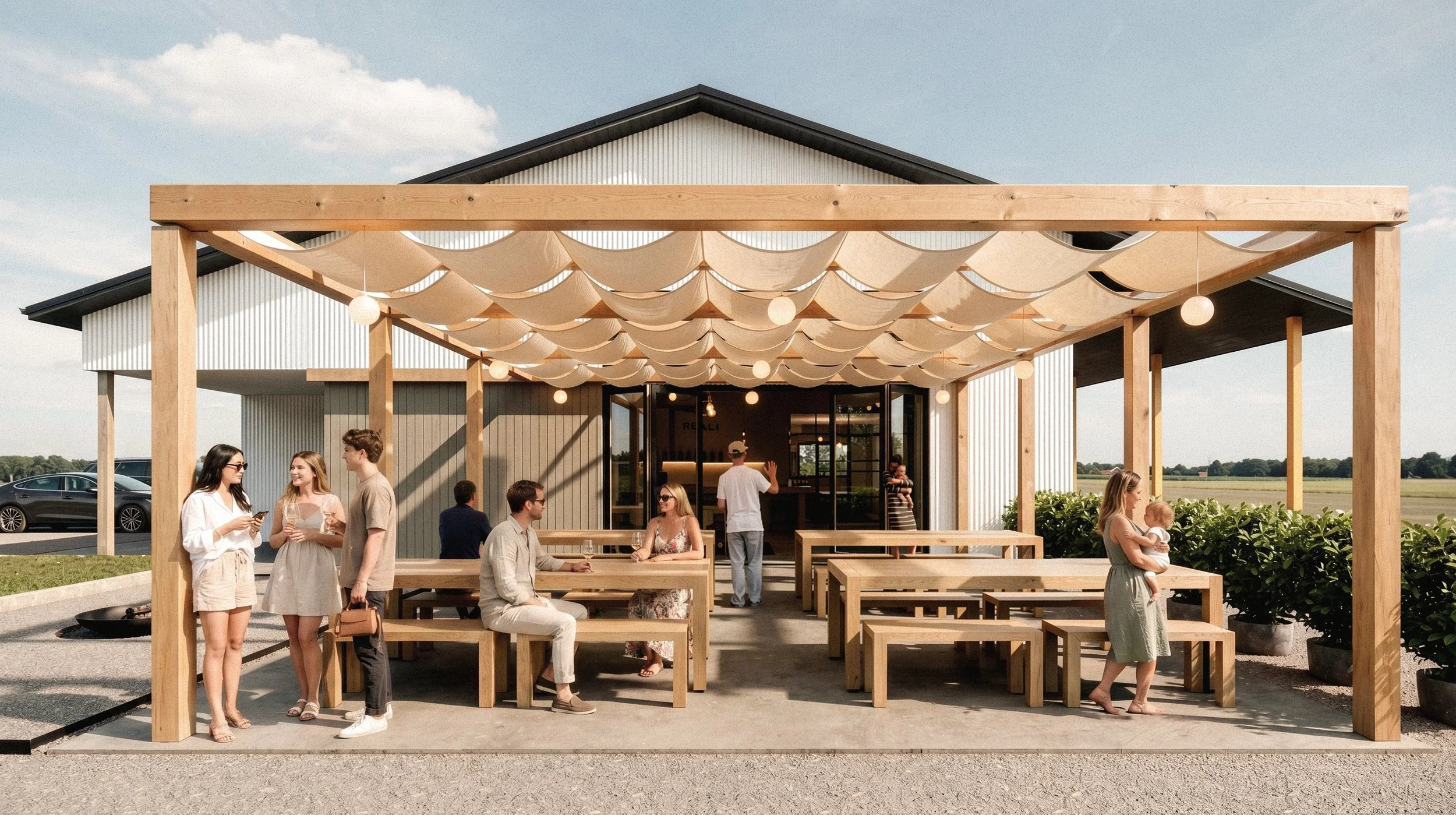
Case Study: Framing the Vineyard at the Walla Walla Estate Tasting Room
On an estate vineyard, the architecture must act as a lens rather than a distraction. The primary goal of the Walla Walla Tasting Room was to create a seamless interface between the guest and the agricultural origin of the wine in their glass.
Building upon the industrial production side of our Walla Walla Winery project, the dedicated tasting room shifts the architectural focus entirely to pacing, comfort, and the calibration of natural light.
Calibrating the Reveal
We designed the entry sequence to intentionally slow the guest down. Rather than walking straight from the parking lot to the tasting bar, visitors are routed through a sheltered, compressed exterior courtyard. When they finally step through the massive entry doors, the space dramatically expands, revealing panoramic, floor-to-ceiling sightlines of the rolling vineyard and the Blue Mountains beyond.
Environmental Glare and Climate Control
A glass-walled room in the high desert presents severe solar challenges. To protect both the wine and the guests, we utilized deep, protective roof overhangs calculated to block harsh summer glare while allowing low-angled winter light to penetrate and warm the space. High-performance, low-E glazing ensures the interior temperature remains perfectly stable, even during 100-degree harvest afternoons.
Intimate Scaling
A common flaw in modern tasting rooms is creating a space that feels cavernous. To maintain intimacy, we broke the floor plan into distinct programmatic zones. Guests can choose the high-energy environment of the main tasting bar, or retreat to lower, lounge-style seating areas defined by dropped wood ceilings and central fireplaces, offering a tailored, private club experience.