The Woodinville Tasting Room
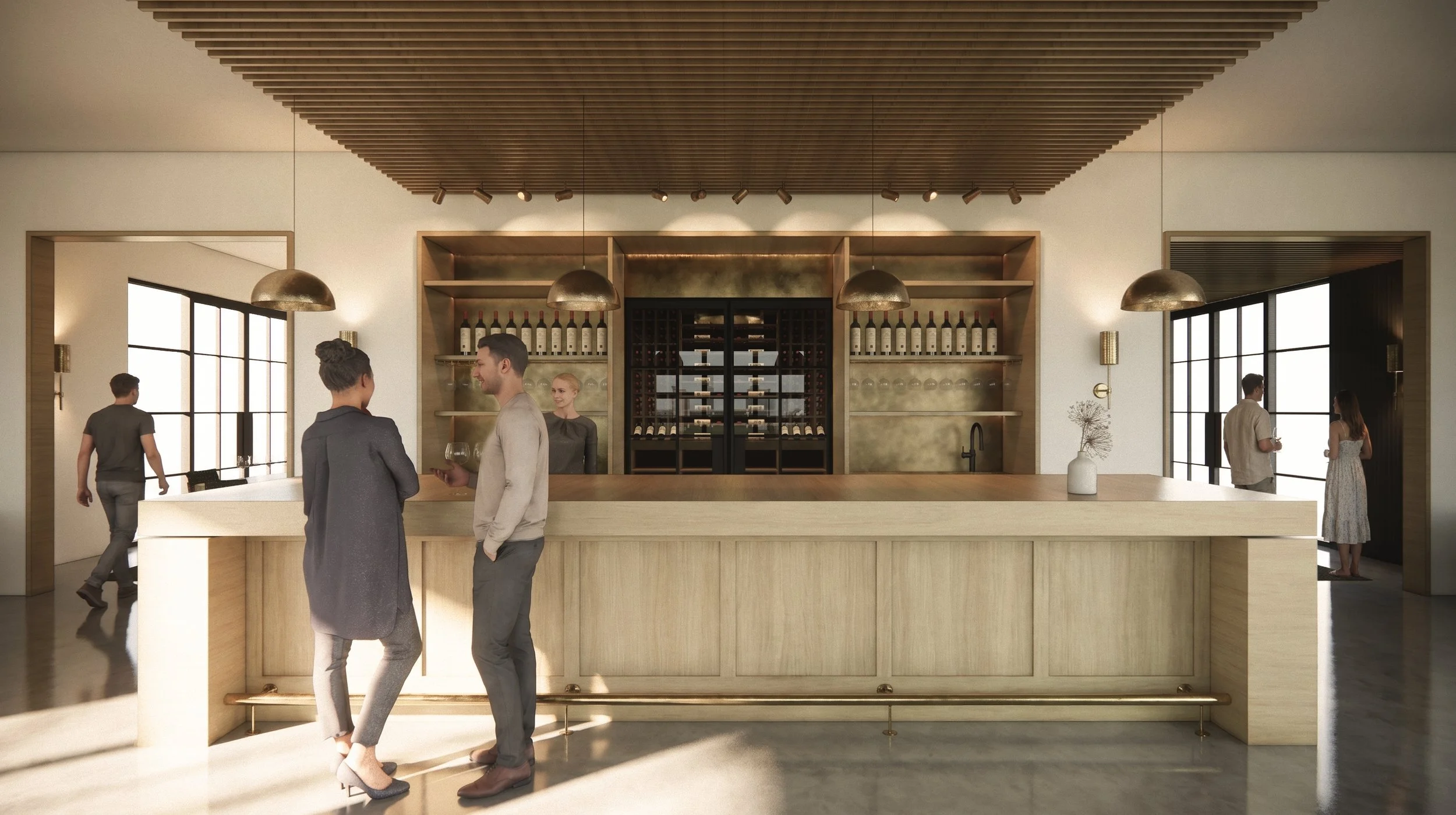
The vineyard is three hours east. The room has to do the work the landscape can't.
The vineyard is three hours east. The building is a commercial space in Woodinville's growing cluster of tasting rooms and artisan producers. The question is whether the room can close that gap without resorting to the kind of heavy-handed "authentic" signaling that usually makes tasting rooms feel staged.
For this 1,300 square foot space at The Yard at Harvest, the brief was precise: welcoming to the first-time visitor and credible to the serious collector, in the same room, at the same time, without tipping into formality. That tension - substance without pretension - shaped every decision from the spatial organization to the material palette to what gets put on display.
The Bar and What's Behind It
A 16-foot white oak tasting bar anchors the space. It's substantial enough to give the room a clear center of gravity without overwhelming the 1,300 square feet around it. Brass pendant lights overhead and brass-accented shelving behind the bar carry warmth through the room without crossing into ornament.
The most considered element is what the room puts in view: a glass-enclosed private cellar, visible from the main room. It's functional wine storage, but positioned and detailed to give guests something to look at and something to understand about the operation behind the bottle. It does more work than a decorative wall treatment and is more honest about what's actually happening in the building.
Breaking the Open Plan
Wood-trimmed openings on either side of the bar lead to smaller seating areas, breaking the single room into zones that feel intimate without feeling enclosed. Steel-framed windows and exterior doors wrap the perimeter, drawing in natural light - an asset Woodinville delivers generously during the summer tasting season.
The result holds its character across conditions. A gray November afternoon and a long July evening are different experiences in the same room.
PROJECT INFO
Location: Woodinville, WA (The Yard at Harvest)
Type: Commercial - Tasting Room
Architecture: Field Report Architecture
Year: 2025
Status: Unbuilt
For the estate side of the same comparison - a converted agricultural structure in wine country itself - see the Walla Walla Tasting Room.
The production-side thinking behind winery design is explored in more detail in our Walla Walla Winery case study.