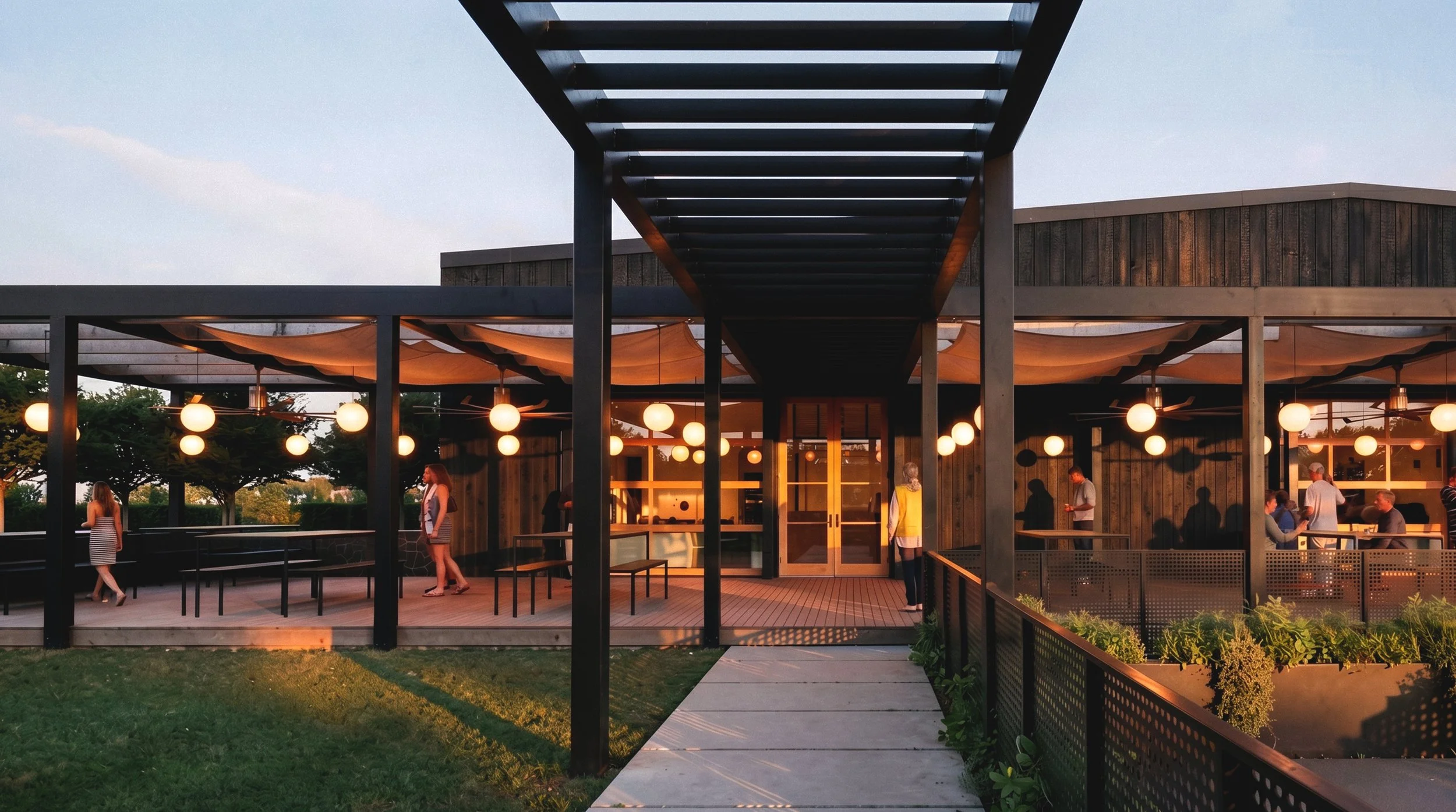
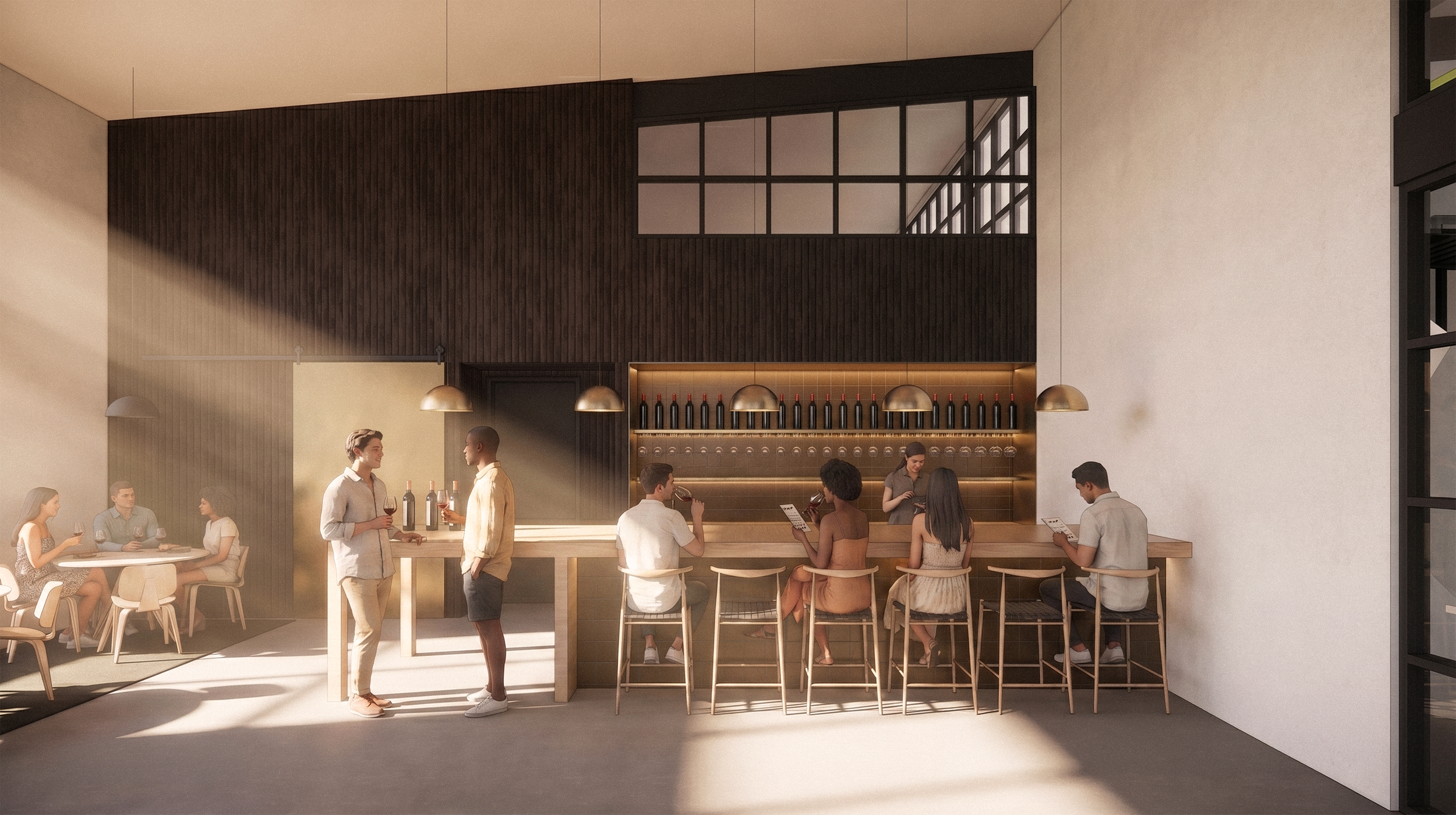
Designing the Walla Walla Winery
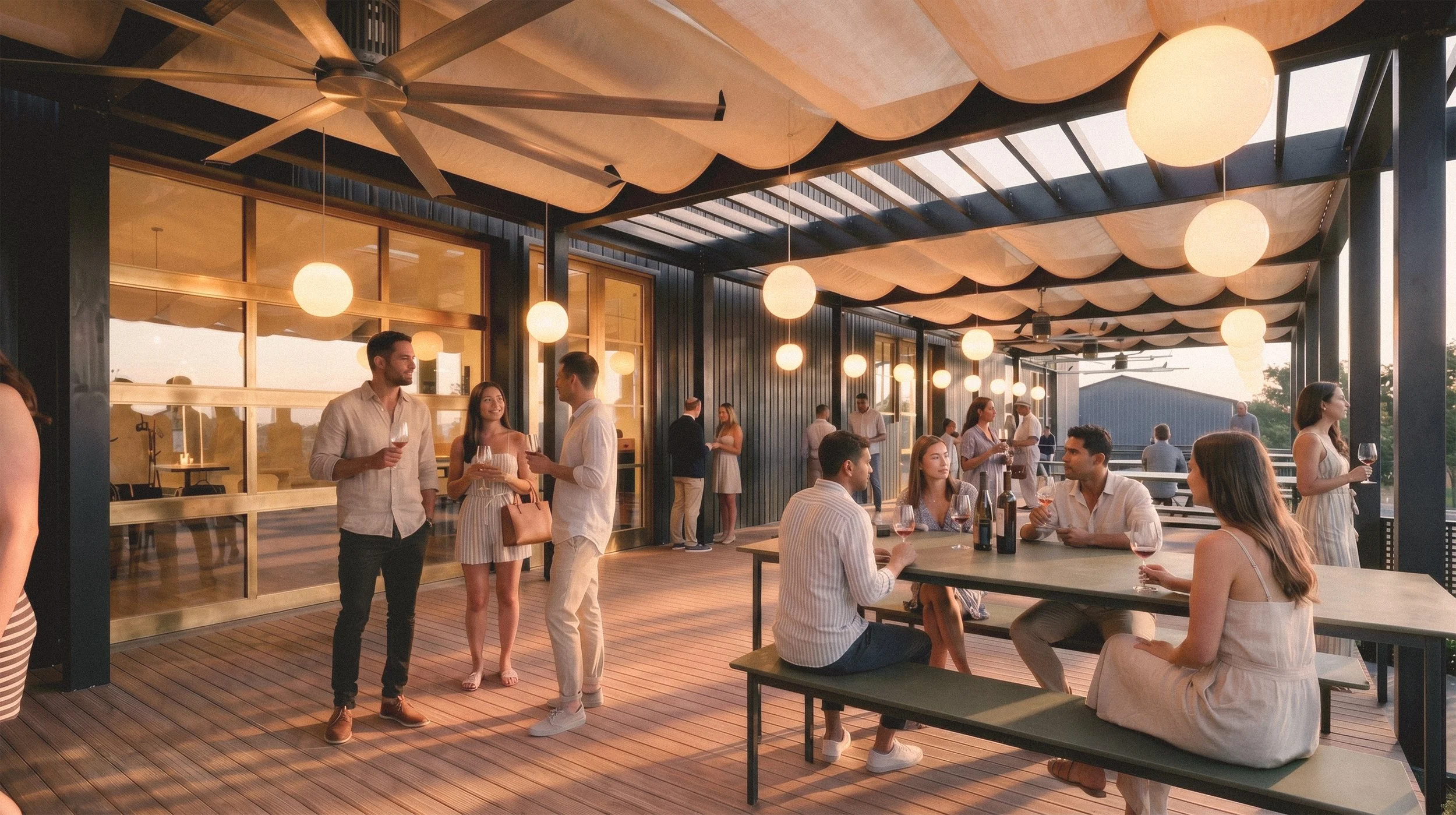
Case Study: The Functional Dance of Production and Hospitality in Winery Architecture
Commercial wine country architecture operates under a compelling duality. A successful winery must function simultaneously as an efficient, industrial agricultural facility and a luxury hospitality environment.
If the industrial flow stalls during harvest, the vintage suffers; if the hospitality spaces lack intimacy, the brand narrative falls flat. For our Walla Walla Winery project, our studio designed an architecture that celebrates this tension, transforming the raw mechanics of winemaking into a sophisticated backdrop for guest hospitality.
Spatial and Acoustic Separation
The physical realities of a working crush pad and fermentation floor are loud, industrial, and aromatically intense. During peak harvest, heavy machinery operates around the clock, glycol chillers hum continuously, and active fermentation fills the air with heavy carbon dioxide.
To protect the guest experience in the tasting salon, we designed a rigorous spatial and acoustic barrier strategy:
Acoustic Glass Interventions: Thick, double-glazed acoustic glass walls divide the tasting room from the barrel cellar. This creates a striking visual connection to the aging vintage while dropping ambient industrial noise to an absolute whisper.
Independent HVAC Zoning: We engineered completely separate climate control fields with dedicated air-filtration loops. This ensures that the intense, volatile aromas of active fermentation never migrate into the guest lounge to compete with the delicate aromatics of the wine in the glass.
Gravity, Flow, and Industrial Choreography
Behind the scenes, the production layout follows a strict, gravity-assisted flow designed to handle fruit as gently as possible. From the covered exterior crush pad, fruit moves seamlessly to fermentation tanks, and ultimately down into the subterranean barrel vaults.
We mapped out every square inch of this industrial loop using precise clearances for forklifts, barrel racks, and cellar crews. By prioritizing wide, unobstructed corridors, integrated floor drains, and easily sanitized surfaces, the facility operates with absolute safety and speed when the harvest window opens.
Material Terroir: Blending High-Output Utility with Luxury
The material palette for the winery had to fulfill a demanding double mandate: it had to withstand the high-acid, high-impact environment of wine production while feeling warm, premium, and inviting for guests.
We utilized exposed, board-formed concrete walls as both the primary structural support and the defining visual texture of the architecture. In the production zones, the concrete is treated with food-grade, acid-resistant sealants to handle juice spills and heavy washdowns. In the hospitality spaces, the exact same concrete is paired with warm white oak cabinetry, hand-blackened steel details, and soft ambient lighting.
By utilizing a shared, honest material language across both sides of the building, the architecture honors the entire lifecycle of the wine—proving that utility and luxury can live under a single roof.