Against Type: A Walla Walla Tasting Room For an Italian Varietals Producer
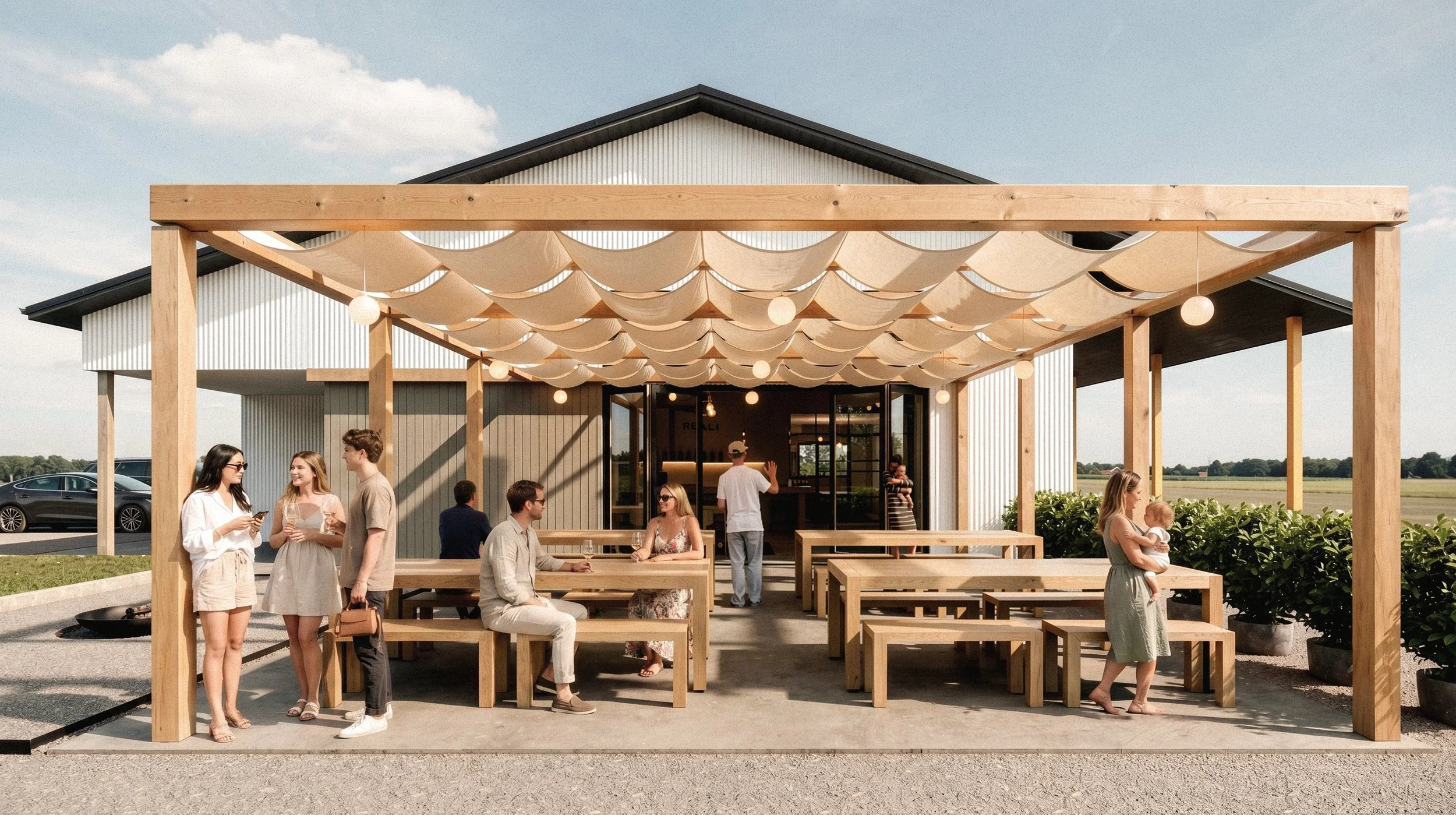
Case Study: Italian varietals, a utilitarian building, and a design that borrows from neither Napa nor Burgundy.
Two things set our Walla Walla Tasting Room project apart from most Walla Walla winery work. First, the client produces Italian varietals - Sangiovese, Nebbiolo, the grapes of Tuscany and Piedmont - in a wine region where the dominant vocabulary is Cabernet, Merlot, and Syrah. Second, the tasting room is not a new-build estate on a hilltop. It's a converted 2,300 square foot agricultural structure north of downtown Walla Walla.
Both departures shaped the design. The client's cultural reference point is Italian rather than Napa or Burgundy, which points toward a specific material register: plaster walls, warm woods, blackened steel, soft light. The adaptive reuse frame meant working with the honest bones of a utilitarian building - not overwriting them, but finding a way to make the existing structure carry a hospitality program it was never designed for.
Working Within 2,300 Square Feet
The floor plan is simple by necessity. A 16-foot oak tasting counter anchors the main room - long enough to handle a busy tasting weekend, restrained enough not to feel like a commercial bar. Richly upholstered seating and intimate tasting nooks pull off to the sides, giving guests who want to sit with a glass somewhere to go that isn't the main counter. The kitchen and storage are behind the bar. The hierarchy is clear from the entry.
The material palette takes its cues from traditional Italian agrarian architecture - specifically the weight and texture of those buildings, not their ornament. Hand-troweled plaster, warm wood, blackened steel. These are materials that age well and that carry an immediate sensory presence. The intent was a room that feels unhurried and grounded, appropriate to both the building's origins and the winemaking tradition the client works within.
The Outdoor Terrace
The most significant architectural addition is a heavy timber trellis structure sheltering an outdoor terrace. Large steel-and-glass doors fold back to open the interior directly to the terrace during Eastern Washington's long warm season - from late spring through harvest - extending the functional footprint for the months that count most in wine country.
The trellis provides shade without enclosure. The terrace maintains an uninterrupted view of the surrounding agricultural landscape. The connection between the interior and the site feels continuous rather than staged.
More on how we approach work in wine country on our Walla Walla architecture page.
PROJECT INFO
Location: Walla Walla, WA
Type: Adaptive Reuse / Commercial - Tasting Room
Architecture: Field Report Architecture
Year: 2025
Status: Built
The adaptive reuse approach here shares a logic with our Walla Walla Winery project - different program, same commitment to working with an existing structure rather than erasing it.
For an urban counterpart to this project, see our Woodinville Tasting Room.