Rethinking the Winery: Adaptive Reuse for Boutique Producers in Walla Walla
Case Study: Walla Walla has plenty of buildings on hills with vineyards below them. This one is not.
The conventional winery archetype is easy to identify: a building on a hill, the vineyard spread below it, a tasting room designed to feel like an estate even when it isn't one. Walla Walla has plenty of that. This winery projecttakes a different approach.
The brief was to take a 24,000 square foot industrial building just outside downtown Walla Walla and transform it into a shared production facility for multiple boutique winemakers - a space where several producers work concurrently, using shared infrastructure and maintaining the kind of flexibility that a dedicated single-estate facility can't offer. The chateau model wasn't available as a reference point, and the project is better for it.
The Case for the Industrial Building
Walla Walla's best winemakers are not always the ones with the deepest pockets. The boutique producer model - small lots, focused varietals, hands-on winemaking - is difficult to sustain when you're also carrying the overhead of a dedicated production facility and an estate hospitality program. A shared facility changes the math.
The existing industrial building provides the footprint, the structural clearance for tank equipment, and the loading access that a converted agricultural or new-build winery would struggle to replicate at this scale. The design repurposes rather than overcomes the building's utilitarian nature - the industrial character is part of the identity, not something to disguise.
Production Logic
The production layout follows a straightforward logic: fruit arrives, moves to fermentation, then to barrel storage, with clear circulation for the forklifts, crews, and equipment that a working winery requires. Wide unobstructed corridors, integrated floor drainage, and easily maintained surfaces are designed in from the start rather than accommodated as afterthoughts.
For a shared facility, the coordination of multiple producers' schedules and storage requirements requires more flexibility than a single-estate winery - the spatial planning reflects that. The mechanical systems, including climate control and ventilation, are zoned to accommodate the separate operational needs of different producers working in the same building.
Hospitality at the Industrial Scale
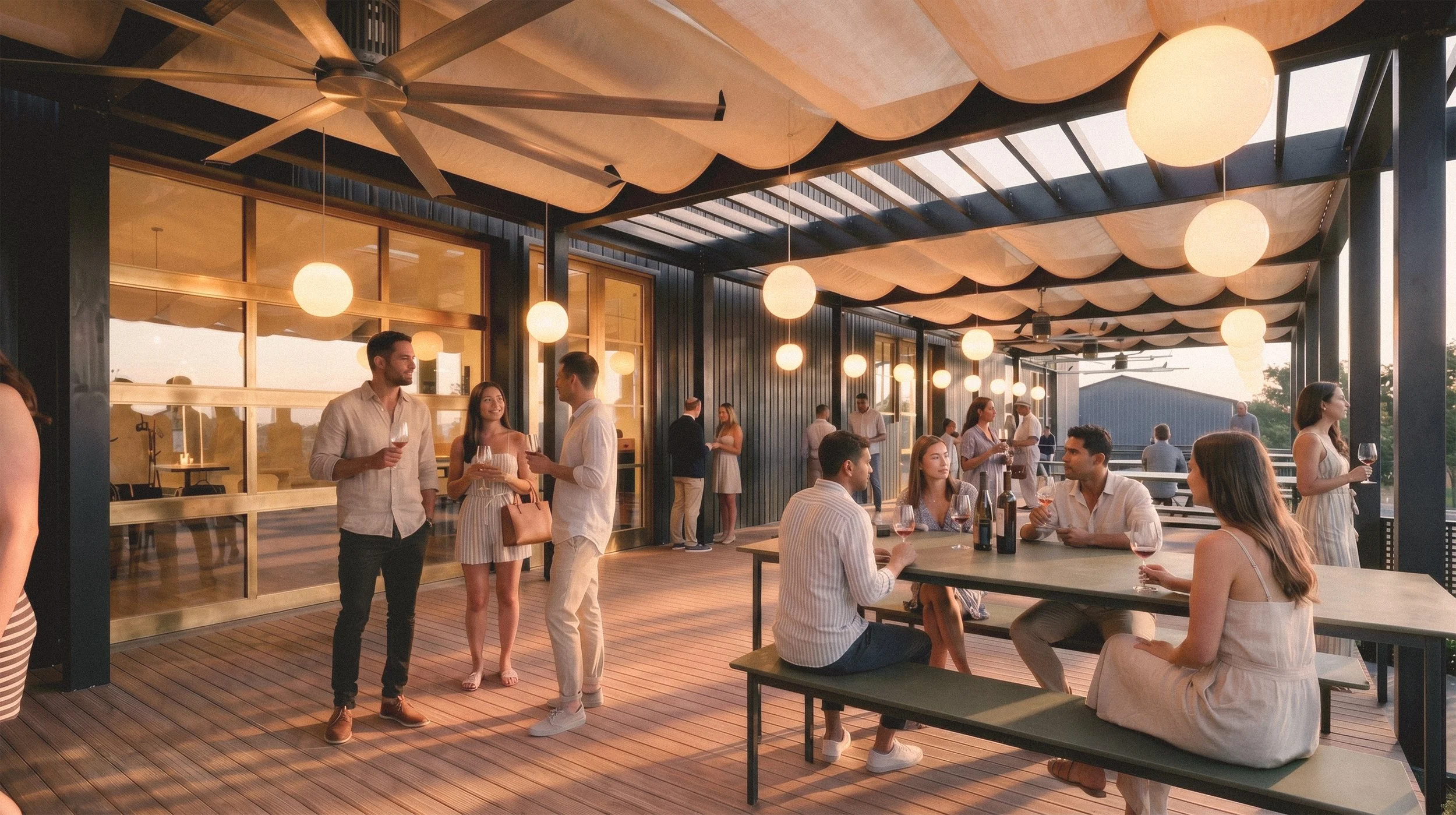
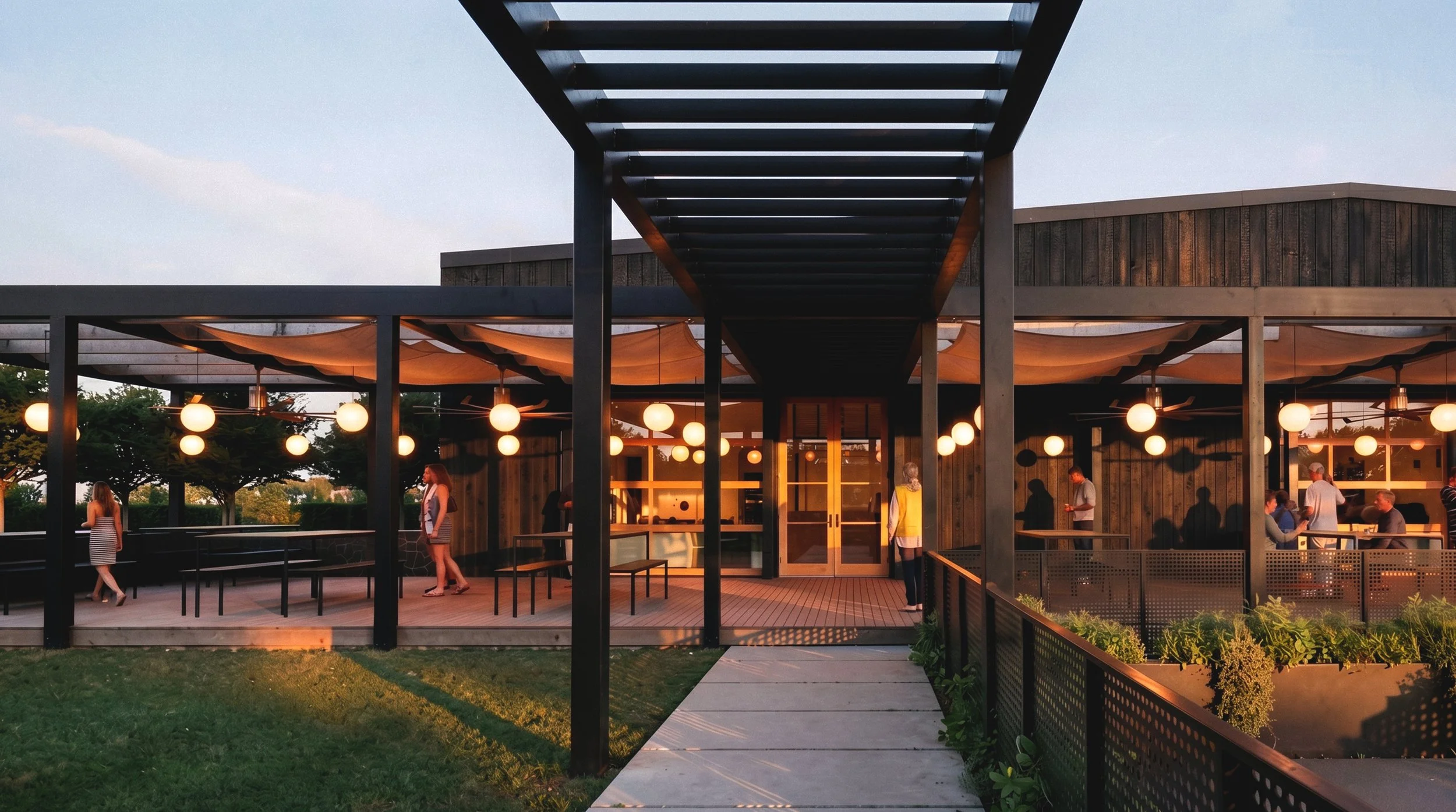
The original building's facade is extended with an outdoor tasting and events deck sitting directly off the tank room and tasting room. The deck serves as both a threshold for visitors and a flexible events space, extending the hospitality program beyond the building envelope without requiring a separate structure.
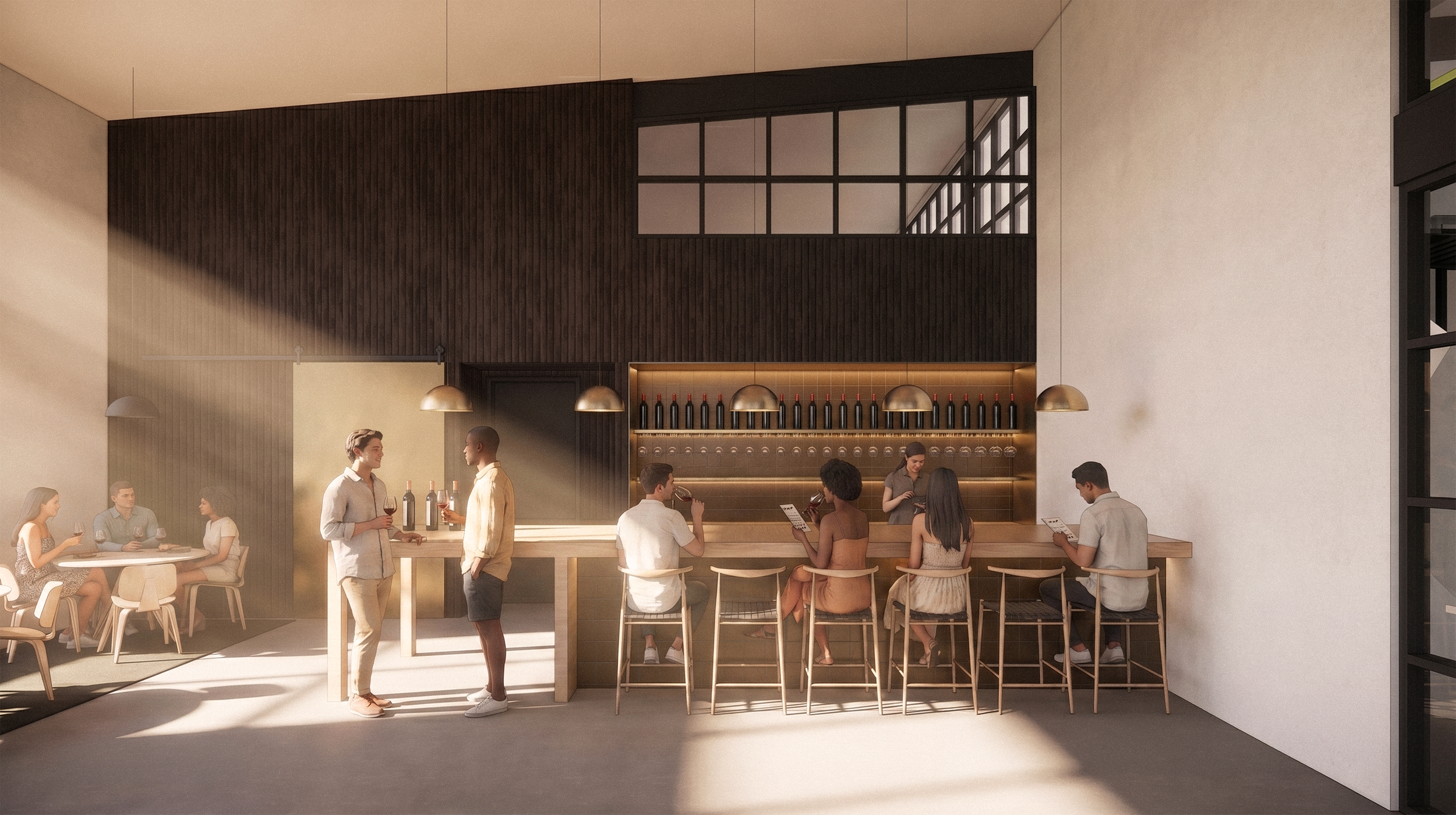
Visitors can taste wines from multiple producers in a single visit, in a tasting environment that puts the winemaking process in clear view. The industrial backdrop is honest rather than theatrical - the tanks and barrels are visible because they're supposed to be, not because they’re staged.
More on how we approach work in wine country on our Walla Walla architecture page.
PROJECT INFO
Location: Walla Walla, WA
Type: Adaptive Reuse / Commercial — Winery Production and Hospitality
Architecture: Field Report Architecture
Structural Engineer: Sweeting Structural Design
Year: 2023–2025
The hospitality side of the winery program is explored in a different register in our Walla Walla Tasting Room case study.
For how an urban tasting room handles the same production-to-hospitality translation without the production floor, see the Woodinville Tasting Room.