Designing The Walla Walla Hillside Residence
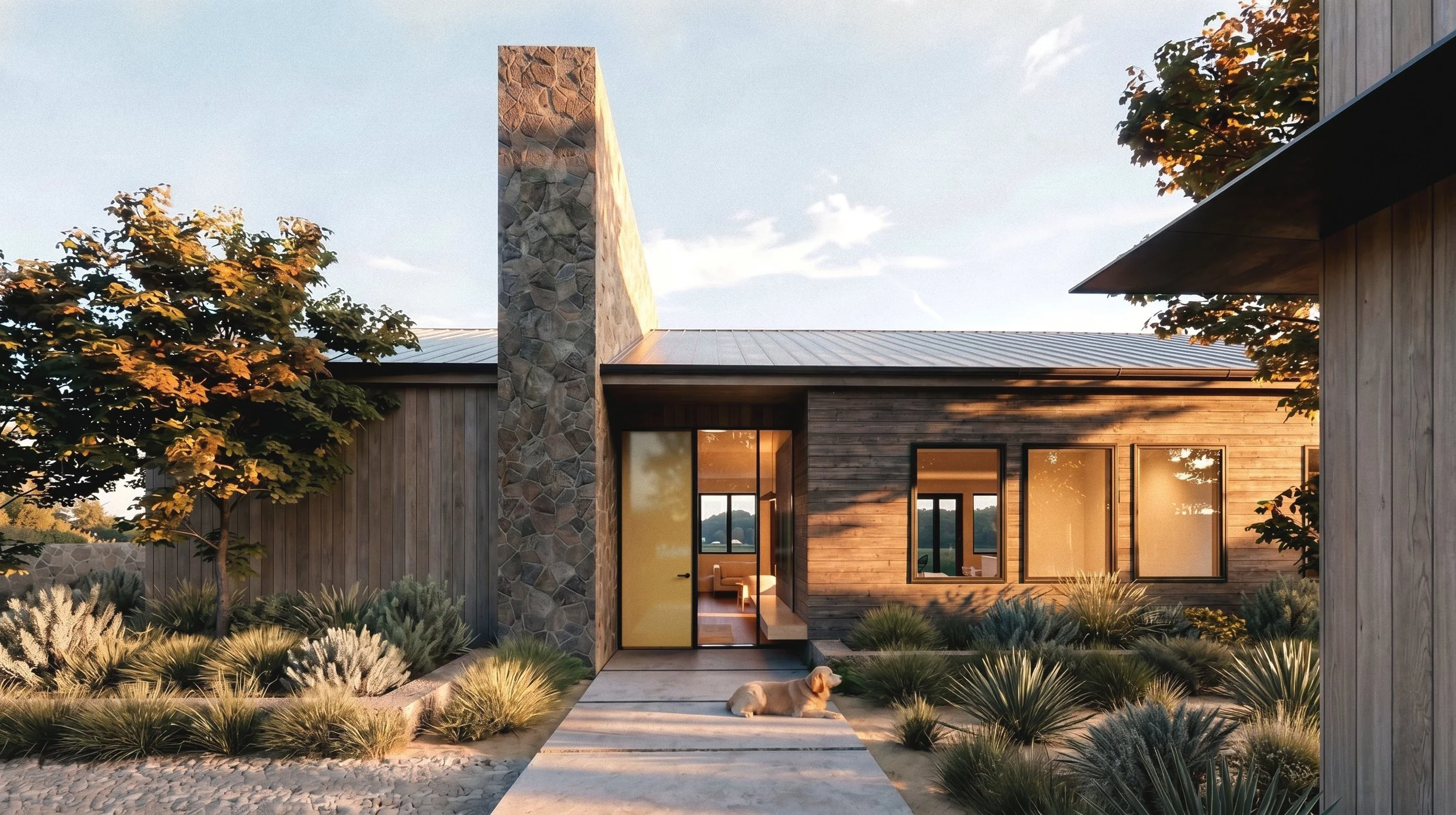
Case Study: A T-plan residence on a vineyard hillside in Eastern Washington - designed to frame the views, step into the topography, and hold up for the long term.
When a site offers unobstructed views of rolling vineyards and the distant silhouette of the Blue Mountains, the architecture has two options: compete with the landscape or work with it. The Walla Walla Residence takes the second approach - a building that steps into the hillside, frames the views deliberately, and doesn't ask to be noticed from the road.
The T-Plan
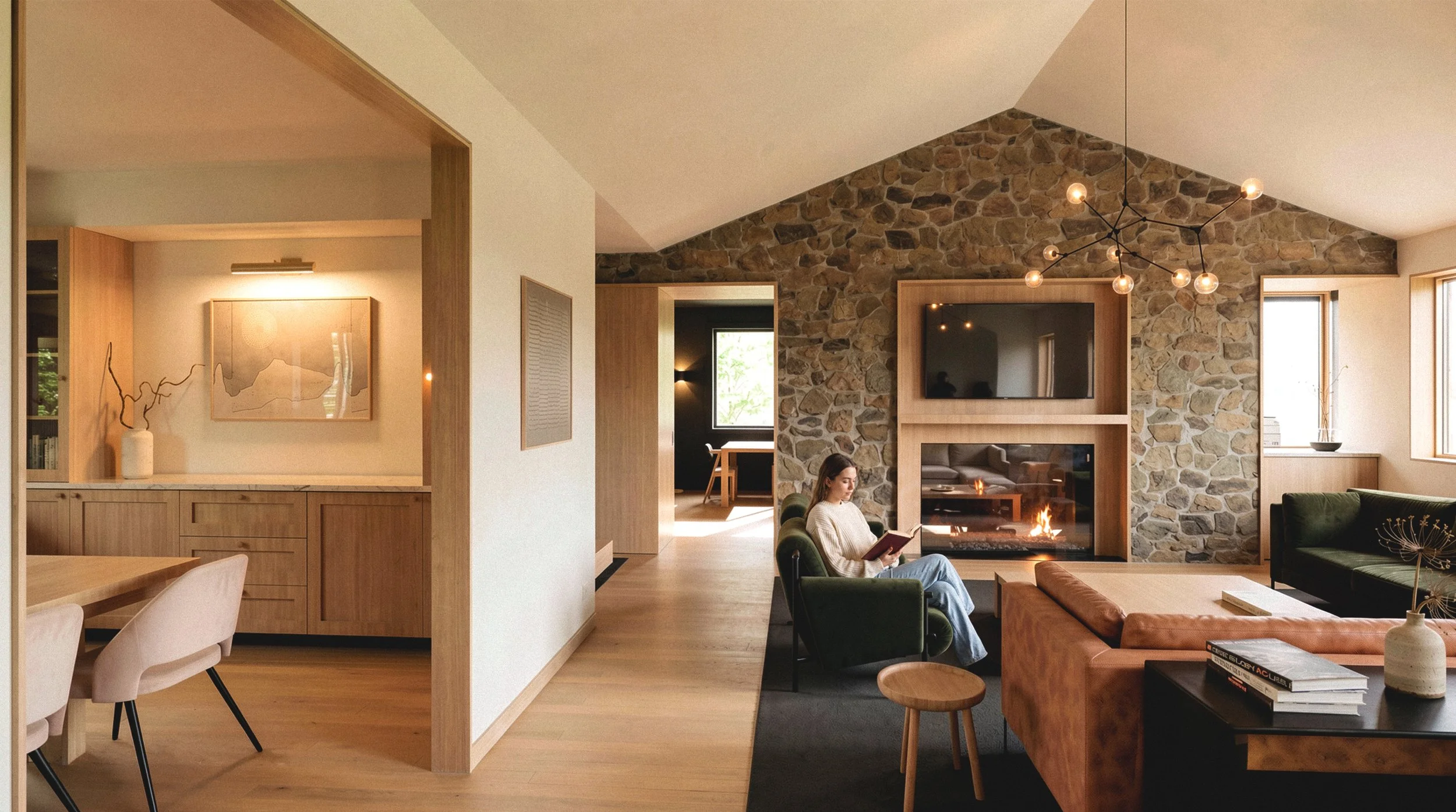
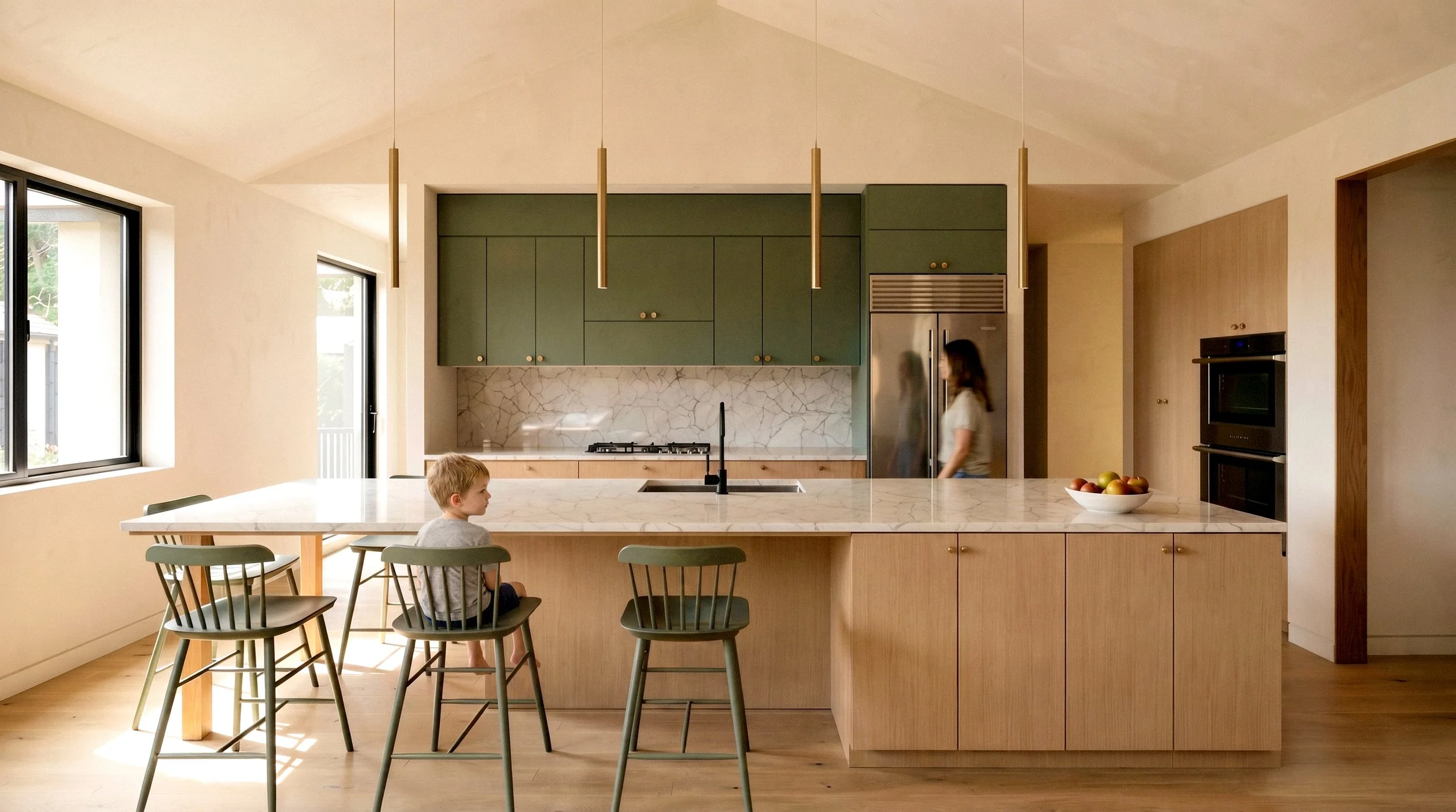
The house is organized as a clean T-configuration - two wings extending from a shared core. One wing holds the communal spaces: kitchen, living, dining, the rooms that orient outward toward the valley. The other holds the private rooms: bedrooms, bathrooms, the quieter end of the house. The geometry is not decorative. It optimizes daylight and cross-ventilation, separates the program cleanly, and allows both wings to orient toward the views rather than having one face the wrong direction.
The entry is a sheltered courtyard that sits at the junction of the two wings. It's a threshold rather than a door - a moment of compression before the main living spaces open up fully toward the vineyard and mountains. Framing that reveal was a deliberate choice in the sequencing of the floor plan.
Stepping the Hillside
Building on a sloped site means the building's profile is legible from multiple directions - from the road below, from the vineyard, from neighboring properties. Rather than forcing a multi-story mass onto the hill, the house is stepped into the topography. This keeps the building's visual presence measured and makes the structure read as an extension of the ridge rather than something imposed on it.
Stepping also allows each section of the house to sit at a different grade, which creates ceiling height variation and view calibration across the floor plan. The main living pavilion gets the full panoramic sweep. The private wing sits a half-level lower, more sheltered and more compressed.
Materials and Long-Term Performance
The exterior palette - board-formed concrete, stone, and warm wood siding - is chosen for longevity and low maintenance in Eastern Washington's climate range. The same materials reappear at the courtyard and outdoor living areas, creating continuity between inside and out.
Equally important and less visible: the house is designed for accessibility and long-term livability from the outset. High-performance glazing handles the thermal demands of a site with 100-degree summers and hard winters. Passive solar orientation reduces mechanical load across both seasons. And the floor plan, circulation widths, and level changes are planned for aging in place - not as an afterthought, but as a structural premise of the design.
More on how we approach work in wine country on our Walla Walla architecture page.
PROJECT INFO
Location: Walla Walla, WA
Type: Custom Residential - New Construction
Architecture: Field Report Architecture
Structural Engineer: Sweeting Structural Design
Year: 2023–2026
Status: In Construction
The Walla Walla wine country context also shaped our approach to a tasting room project in the same region.